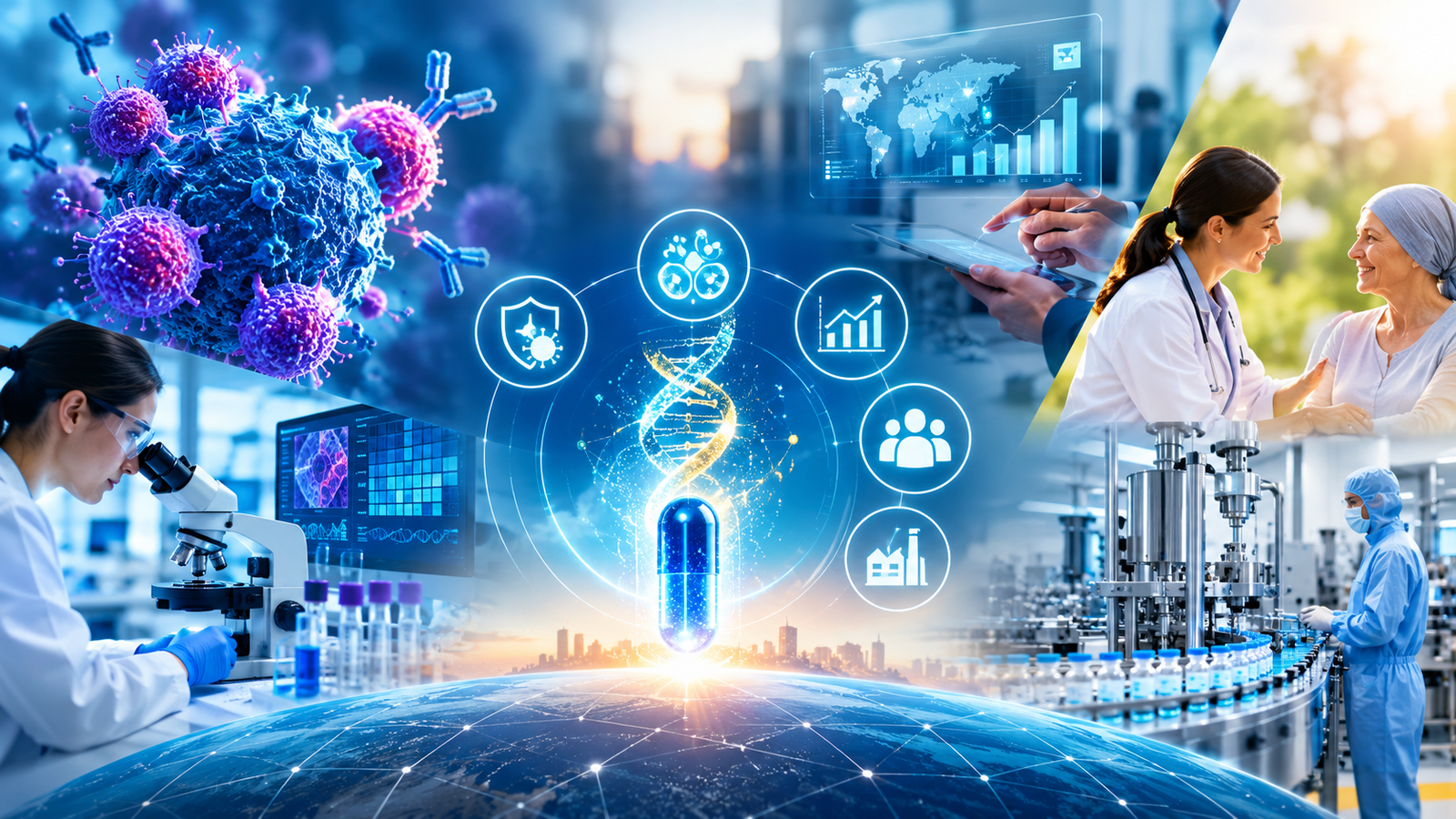
The pharmaceutical and life sciences industry is entering a period of rapid transformation. Advances in immuno-oncology, biomarker science, real-world evidence, artificial intelligence, precision medicine, high-potency therapies and advanced manufacturing are changing how medicines are discovered, developed, evaluated, manufactured and ultimately brought to patients.
As these areas continue to evolve, the industry is also becoming increasingly interconnected. Scientific innovation must be supported by reliable evidence. Evidence must translate into meaningful clinical and economic value. Innovative therapies must be manufactured safely and consistently. And ultimately, patients need timely access to treatments that can make a meaningful difference.
Recognizing these changing industry priorities, Veridon Global is bringing together three focused international conferences in 2027, covering critical areas across the pharmaceutical and life sciences ecosystem: immuno-oncology and biomarkers, real-world evidence and market access, and HPAPI manufacturing, cleaning and containment.
Together, these conferences reflect some of the key challenges and opportunities shaping the pharmaceutical industry in 2027.
1. Advancing Immuno-Oncology and Biomarker Innovation
Cancer treatment continues to evolve rapidly, with immuno-oncology and precision medicine opening new possibilities for patients and researchers.
The development of immune checkpoint inhibitors, CAR-T and other cell therapies, bispecific antibodies, antibody-drug conjugates and emerging immunotherapeutic approaches is creating new opportunities for treating complex cancers.
At the same time, biomarkers are becoming increasingly important in understanding disease biology, identifying appropriate patient populations and supporting treatment decisions.
The 3rd Edition Immuno-Oncology & Biomarker Summit, taking place on 11–12 March 2027 in Basel, Switzerland, will bring together professionals from pharmaceutical and biotechnology companies, diagnostics, research organizations, CROs, academia and technology companies.
The summit will explore developments across:
- Immuno-oncology and cancer immunotherapy
- Biomarker discovery, development and validation
- Precision oncology
- Translational medicine
- Tumour profiling and patient stratification
- Companion diagnostics
- Liquid biopsy and circulating biomarkers
- Genomics and multi-omics
- Single-cell analysis
- Spatial biology
- AI and computational biomarker discovery
- Cell and gene therapy
- Clinical biomarkers and drug development
The 2027 programme also looks at how emerging technologies can accelerate the translation of scientific discoveries from the laboratory into clinical applications.
Why Biomarkers Matter in the Future of Oncology
As therapies become increasingly targeted, identifying the right patients for the right treatment is becoming more important.
Biomarker development can support patient selection, clinical trial optimization, treatment monitoring and precision medicine strategies. Combining biomarkers with technologies such as AI, multi-omics, liquid biopsy and spatial biology could further improve the ability to understand disease and treatment response.
This makes biomarker innovation an important part of the next generation of oncology research.
2. Turning Real-World Evidence Into Patient Access
Scientific innovation alone does not guarantee that a medicine will reach the patients who need it.
Pharmaceutical companies increasingly need to demonstrate not only clinical efficacy but also real-world effectiveness, economic value and relevance to healthcare systems.
This is where real-world evidence (RWE), health economics and outcomes research (HEOR), health technology assessment (HTA), pricing and reimbursement become increasingly important.
The 3rd Annual Evidence 360 Summit – RWE, Market Access & Pricing will take place on 11–12 March 2027 in Basel, Switzerland. The event will bring together senior professionals across RWE, HEOR, HTA, market access, pricing and reimbursement, payer organizations, academia and technology.
The summit focuses on connecting evidence generation with the market access journey rather than treating these disciplines as separate functions.
Key areas include:
- RWE strategy from early development through post-launch
- Real-world data sources and interoperability
- EU HTA and Joint Clinical Assessment readiness
- Evidence generation aligned with payer expectations
- Comparative evidence
- Patient-reported outcomes
- AI and advanced analytics
- Pricing and reimbursement
- Value-based pricing
- Innovative contracting models
- Payer and HTA perspectives
- Global market access strategies
The event is designed to explore how evidence can influence pricing, reimbursement and ultimately patient access.
From Evidence Generation to Healthcare Decisions
The role of RWE is expanding as healthcare stakeholders seek a broader understanding of how medicines perform outside controlled clinical trial environments.
Data from healthcare systems, registries, electronic health records and other real-world sources can provide additional insights into treatment outcomes, patient populations and healthcare utilization.
When combined with clinical and economic evidence, these insights can support more informed healthcare decisions and strengthen strategies for market access.
The growing importance of evidence-based decision-making means that pharmaceutical organizations increasingly need to consider market access and evidence generation throughout the product lifecycle.
3. Preparing for the Next Generation of HPAPI Manufacturing
While scientific innovation is changing the therapies being developed, it is also creating new manufacturing challenges.
The increasing development of high-potency active pharmaceutical ingredients (HPAPIs) and complex therapies places greater emphasis on containment, cleaning validation, occupational safety, regulatory compliance and facility design.
Manufacturers need to manage the risks associated with highly potent compounds while maintaining efficient and compliant production environments.
The 3rd Annual EuroPotent 360 Summit will take place on 20–21 May 2027 in Rome, Italy, with a focus on Cleaning, Containment & Compliance in HPAPI Manufacturing.
The summit will bring together professionals across pharmaceutical and biopharmaceutical manufacturing,
including experts in:
- HPAPI manufacturing
- Cleaning validation
- Containment
- Pharmaceutical engineering
- Quality
- Compliance
- EHS
- Occupational hygiene
- Toxicology
- Risk assessment
- Facility design
- CMO/CDMO operations
- Maintenance
- Safety
The 2027 programme addresses practical manufacturing challenges such as exposure risks, containment strategy, cleaning and containment trade-offs, facility retrofitting, maintenance exposure, technology transfer and the use of data to predict potential failures.
The Growing Importance of Containment and Cleaning
As pharmaceutical compounds become more potent and complex, manufacturing facilities need to adapt.
Effective containment can help reduce occupational exposure and prevent cross-contamination, while robust cleaning strategies are essential for maintaining product quality and regulatory compliance.
The challenge is finding the right balance between safety, containment performance, cleaning requirements, operational efficiency and cost.
These issues are particularly important as companies scale products from development into commercial manufacturing and as existing facilities are adapted for new generations of potent compounds.
Three Areas, One Pharmaceutical Lifecycle
At first glance, immuno-oncology, real-world evidence and HPAPI manufacturing may appear to be completely different areas of the pharmaceutical industry.
However, they are connected by the same fundamental objective: bringing innovative medicines from scientific discovery to patients safely, effectively and sustainably.
The connection can be viewed across the pharmaceutical lifecycle:
Innovation → Development → Evidence → Manufacturing → Market Access → Patient Outcomes
Immuno-oncology and biomarker research help identify and develop innovative therapies.
Real-world evidence and HEOR help demonstrate how those therapies perform and the value they provide to healthcare systems.
Manufacturing, containment and compliance ensure that complex and potent therapies can be produced safely and consistently.
Market access strategies help translate clinical and economic value into availability for patients.
Together, these disciplines form an increasingly interconnected pharmaceutical ecosystem.